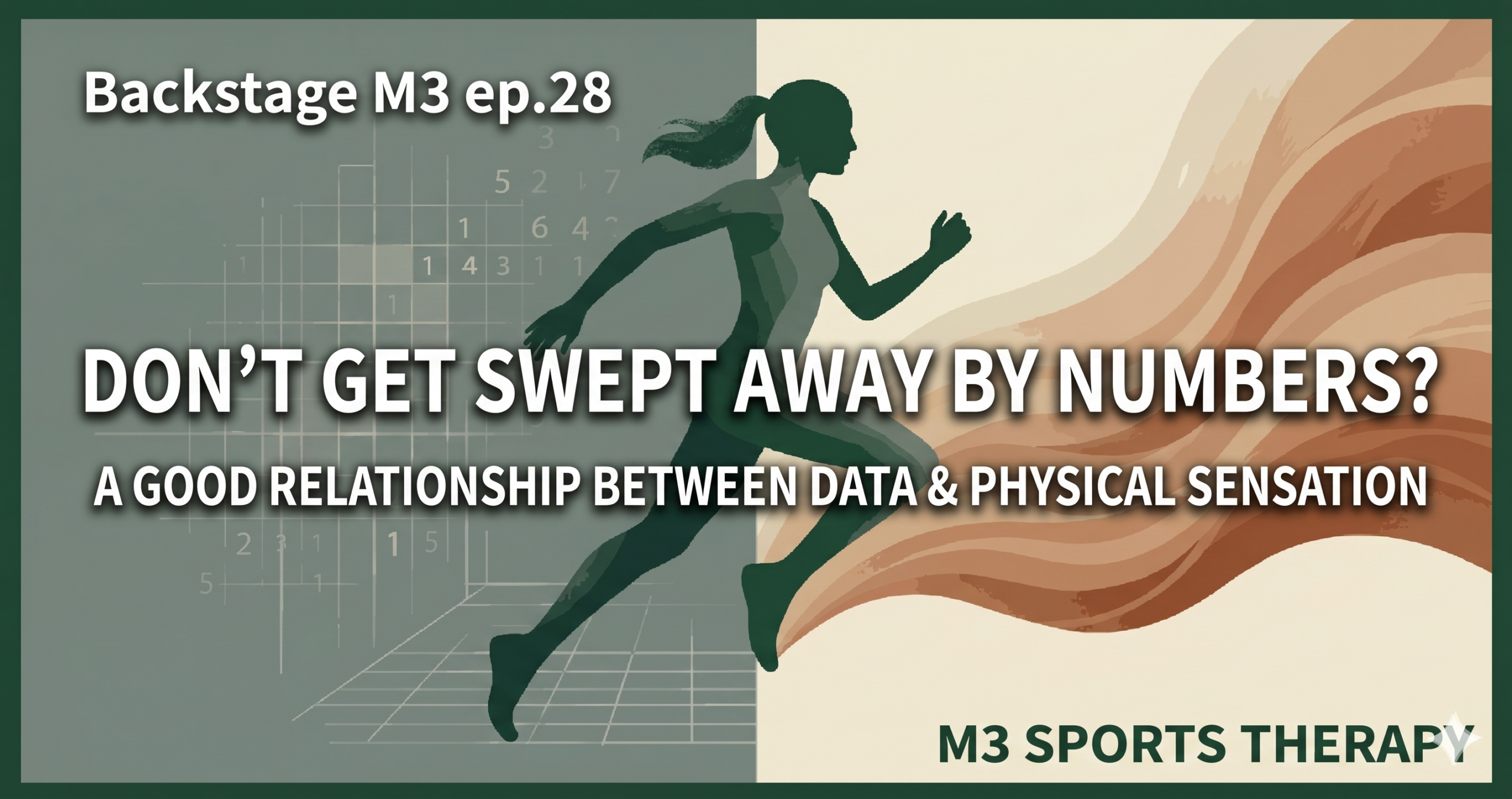
This blog post is a highlight version of the podcast “Backstage M3” episode ep.28 – Is Quantifying Everything Actually Good?. Please be sure to check out the full episode on our podcast as well
The Changing Seasons and My Recent “Atmospheric Pressure” Experiment
-
The Arrival of Spring and Bodily Changes: The cherry blossoms are in full bloom, and the streets are wonderfully lively with people enjoying the view. This is also a time of year when it is easy to physically feel the impact of shifting temperatures and weather on our bodies.
-
Experimenting with Data: Recently, as a personal trial, I have been meticulously tracking atmospheric pressure (in hectopascals). I have noticed a trend where my body feels heavier and my mood gets a bit gloomy on rainy days when the pressure drops (for example, from 1017 to 1012 hPa). Although I do not have enough data points yet, I have started this quantification process simply to observe the changes in my condition.
Quantifying Sports and the Importance of “Analog” Experiences Behind Convenience
-
Advancing Measurement Technology: The world of sports is becoming increasingly data-driven. Nowadays, high-end equipment like force plates can measure everything down to the exact strength and timing of how someone pushes off the ground.
-
Doubts About Costly and Convenient Tools: Having more options is wonderful, but I still question whether more advanced tools and data always lead to a better approach.
-
Concerns Over Relying Too Heavily on Digital and AI:
-
As I have mentioned before, relying too much on convenient AI tools causes us to lose the effort and process involved in searching for answers.
-
When looking up an English word, using a physical paper dictionary tends to give you a stronger sense of retaining it in your memory compared to getting an instant answer from an AI.
-
The same goes for reading and note-taking; writing by hand in a notebook helps information sink into your brain much better than typing. I believe it is vital to value analog processes and intentionally spend time on the things that truly matter.
-
The Risk of Being Controlled by Numbers and My “Thermometer” Experience
-
Data in the Baseball World: Tracking things like a pitcher’s spin rate to set goals is excellent. However, there is a danger of becoming overly anxious and letting your mood swing with every fluctuation—essentially being controlled by the numbers. Athletes should be tuning into their own bodies, not conversing with data.
-
Trauma from a Thermometer (The Mental Impact):
-
About four years ago, when I fell ill, my intuition told me my temperature was probably in the low 37s (Celsius). However, when I actually checked the thermometer, it read 37.8°C.
-
The moment I saw that number, it took a toll on my mental state; I suddenly felt much worse and completely convinced myself that I was severely sick.
-
Since then, when I feel under the weather, I purposely avoid looking at a thermometer and choose to trust my own subjective feeling of “I can move, I am okay.”
-
The Limits of Binding People to a Single Metric: Nutrition and Blood Pressure
-
Modern Diet and Nutrition: Calorie counting is often treated as an absolute rule. But by focusing entirely on that number, are we neglecting a person’s real, individual sense of “I feel great when I eat this”?
-
Different Foundations Across Regions and Countries (The Example of Blood Pressure):
-
Even just within Japan, food cultures vary drastically. For instance, the Tohoku region traditionally leans toward strong flavors due to a history of preserved foods, whereas Western Japan favors lighter, dashi-based flavors.
-
When climate, geography, traditional diets, and medical or injury histories vary so much, every individual’s metabolism and gut microbiome balance will naturally be completely different.
-
Applying a single uniform numerical standard and systematically advising someone, “Because of this number, you must cut back on this food,” feels a bit too reckless. The more you tailor the approach to the individual, the more the ideal solution changes.
-
-
Guiding with a Focus on Individuality: Rather than categorizing people by numbers, I want to be coached by someone who looks at my unique background and history—and as a therapist, that is exactly the kind of professional I strive to be.
Balancing Subjective Feeling and Objective Data
-
Media Trends: Sports channels on YouTube and other platforms strongly tend to highlight clear numbers because nuanced physical sensations are incredibly difficult to put into words. Unfortunately, this also tends to increase the number of people who get swept away by data.
-
“Fatigue” Cannot Be Defined: An abstract feeling like “being tired” cannot be perfectly defined by a number. What matters most is your own internal yardstick: “How do I feel right now compared to yesterday or a month ago?”
-
Today’s Conclusion:
-
If you tend to get overwhelmed or controlled by numbers, try to place a little more trust in your body’s natural sensations.
-
Conversely, if you rely entirely on intuition, try checking in with objective data once in a while to see where you stand.
-
It is not a matter of which one is right or wrong; the key is finding the balance to utilize both effectively.
-